
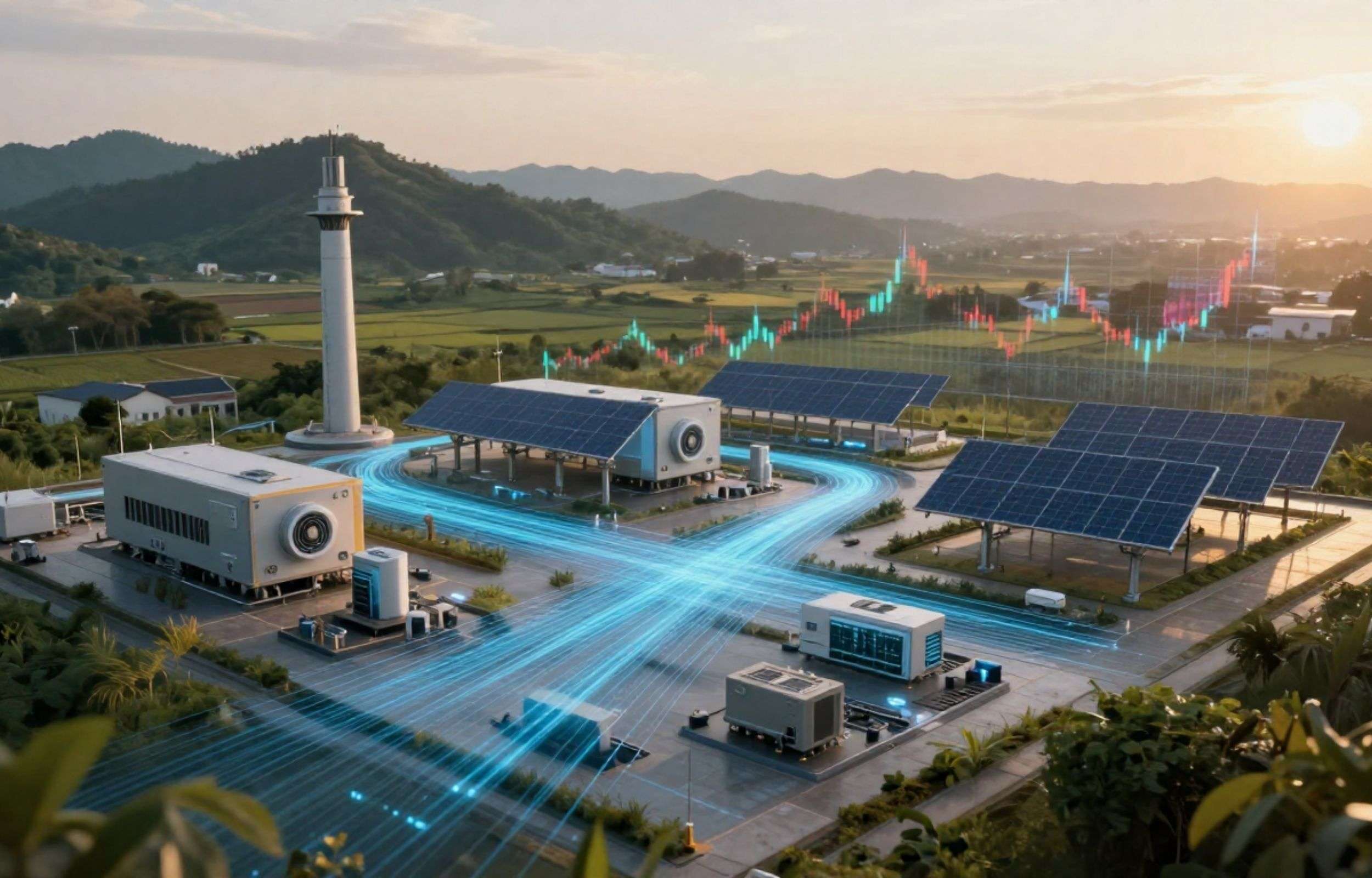
Why AI Stocks Are Now Energy Stocks
Introduction: The AI Boom Has a Power Problem
Artificial Intelligence is often described as a software revolution—but behind every AI breakthrough lies a very physical reality: electricity. From ChatGPT-style models to enterprise automation and autonomous systems, modern AI runs on massive data centers packed with energy-hungry GPUs.
As AI adoption accelerates, a surprising truth is becoming clear:
The limiting factor for AI is no longer algorithms or talent—it’s power.
This is why investors, governments, and corporations are increasingly treating AI stocks as energy stocks. The companies that generate, transmit, and stabilize electricity are becoming just as critical to AI growth as chipmakers and cloud platforms.
This article explains why AI and energy are now inseparable, using data, research, and market realities to answer the biggest questions investors and readers are asking.
AI Is Not Just Software—It Is Industrial Infrastructure
Traditional software businesses scale cheaply. Add more users, spin up more servers, and costs rise gradually. AI doesn’t work that way.
AI requires:
- Specialized chips (GPUs, TPUs)
- Massive data centers
- Advanced cooling systems
- Dedicated power infrastructure
- 24/7 uptime
In effect, AI resembles heavy industry, not lightweight software.
AI data centers are closer to steel mills than SaaS companies when it comes to energy demand.
— Infrastructure analyst, global investment firm
This physical reality is why energy access has become a strategic asset for AI companies.
Why AI Consumes So Much Electricity
1. Training Large Models Is Extremely Power-Intensive
Training a large language model involves running thousands of GPUs continuously for weeks or months.
Estimated energy usage for training a single large AI model:
| Activity | Estimated Energy Use |
|---|---|
| Training one frontier AI model | 1–5 GWh |
| Equivalent to | Powering 1,000+ homes for a year |
(Source: aggregated estimates from academic research and cloud infrastructure disclosures)
2. Inference at Scale Multiplies the Load
Training is only the beginning. Once deployed:
- Millions of users query AI models daily
- Enterprise AI runs continuously
- Latency requirements demand always-on systems
Inference can consume more energy over time than training itself.
3. Cooling Doubles the Energy Problem
For every watt used in computation, additional energy is required for cooling.
| Component | Share of Energy Use |
|---|---|
| Compute (GPUs/CPUs) | ~50–60% |
| Cooling & overhead | ~40–50% |
This is why liquid cooling and advanced thermal systems are becoming critical—but they increase infrastructure complexity and power needs, not reduce them.
Data Centers: The Factories of the AI Era
AI runs inside data centers, and these facilities are becoming some of the largest electricity consumers on the planet.
Data Center Power Comparison
| Entity | Approximate Power Demand |
|---|---|
| Small city | 100–200 MW |
| Hyperscale AI data center | 200–500 MW |
| AI cluster campus | Up to 1 GW |
1 gigawatt = power for ~750,000 homes
This is why new AI data centers are increasingly built:
- Near power plants
- With dedicated substations
- With long-term utility contracts
The Grid Bottleneck: Why Power Is Slowing AI Growth
Power grids were not designed for AI.
Major constraints include:
- Aging transmission infrastructure
- Transformer shortages
- Limited peak-load capacity
- Slow permitting and approvals
In many regions, data center projects are delayed not by capital or technology—but by grid access.
You can buy GPUs in months. Grid upgrades take years.
— Energy infrastructure executive
This mismatch is turning energy availability into a competitive advantage.
Why Energy Companies Are Becoming AI Enablers
AI growth creates predictable, long-term electricity demand, which is exactly what utilities and power producers value.
Why Utilities Love AI Demand
| Factor | Why It Matters |
|---|---|
| 24/7 usage | Stable baseload demand |
| Long-term contracts | Revenue visibility |
| High switching costs | Sticky customers |
| Scale | Justifies infrastructure investment |
Utilities, power producers, and grid operators are no longer passive suppliers—they are strategic partners in AI expansion.
The Return of “Old Energy” Because of AI
Despite sustainability goals, AI needs reliable baseload power.
Why Renewables Alone Are Not Enough
| Energy Type | Strength | Limitation |
|---|---|---|
| Solar | Clean, cheap | Intermittent |
| Wind | Scalable | Weather-dependent |
| Batteries | Storage | Expensive, limited duration |
| Nuclear | Reliable baseload | Long build times |
| Natural Gas | Flexible & reliable | Carbon emissions |
This is why:
- Nuclear is seeing renewed interest
- Natural gas remains critical
- Hybrid energy systems are emerging
AI doesn’t care if power is green or brown—it cares if it’s always on.
AI Capital Expenditure Is Actually Energy CapEx
AI spending headlines often focus on chips—but energy-related costs dominate long-term economics.
Simplified AI Infrastructure Cost Breakdown
| Category | Approx. Share |
|---|---|
| Chips & servers | 30–40% |
| Buildings & cooling | 25–30% |
| Power infrastructure & energy | 30–40% |
Electricity is not just an operating cost—it’s a strategic input that determines scalability and profitability.
Why AI Stocks Are Now Energy Stocks (Investor Perspective)
When investors buy “AI exposure,” they are indirectly betting on:
- Electricity demand growth
- Grid expansion
- Power reliability
- Energy pricing stability
AI Value Chain Exposure
| Layer | Examples |
|---|---|
| AI models | OpenAI-style platforms |
| Chips | GPU manufacturers |
| Infrastructure | Data centers |
| Energy | Utilities, power producers |
| Grid equipment | Transformers, substations |
Ignoring energy means missing a major part of the AI value chain.
Energy, Geopolitics, and the AI Arms Race
Countries are now competing on:
- Compute capacity
- Semiconductor supply
- Energy availability
AI leadership increasingly depends on energy security.
No power, no AI. National strategy now starts with the grid.
This explains why governments are fast-tracking:
- Grid modernization
- Power plant approvals
- Strategic energy investments
Chart: AI Growth vs Energy Demand (Illustrative)
│
│ ██████████
│ █████████
│ ████████
│ ██████
│
└──────────────────────────
Energy Capacity Growth
Insight: AI demand is rising faster than energy capacity—creating tension, opportunity, and pricing power for energy providers.
The Future: AI Is Becoming an Energy-First Industry
Looking ahead:
- Power availability will shape where AI clusters emerge
- Energy costs will influence AI pricing
- Utilities will become tech-adjacent businesses
- Energy investment will be essential to AI scaling
In the next decade, the question won’t be who has the best AI—but who can power it.
Read More: 5 Smart Investment Options for New Investors
Conclusion: Electricity Is the New Oil of the AI Era
AI is transforming industries, markets, and economies—but it is doing so on a foundation of electricity. As AI workloads explode, energy has moved from a background input to a front-line constraint.
That is why:
- AI stocks increasingly behave like energy stocks
- Utilities are becoming AI growth plays
- Power infrastructure is now tech infrastructure
For investors, policymakers, and businesses alike, one truth stands out:
In the age of artificial intelligence, energy is no longer optional—it is the strategy.