
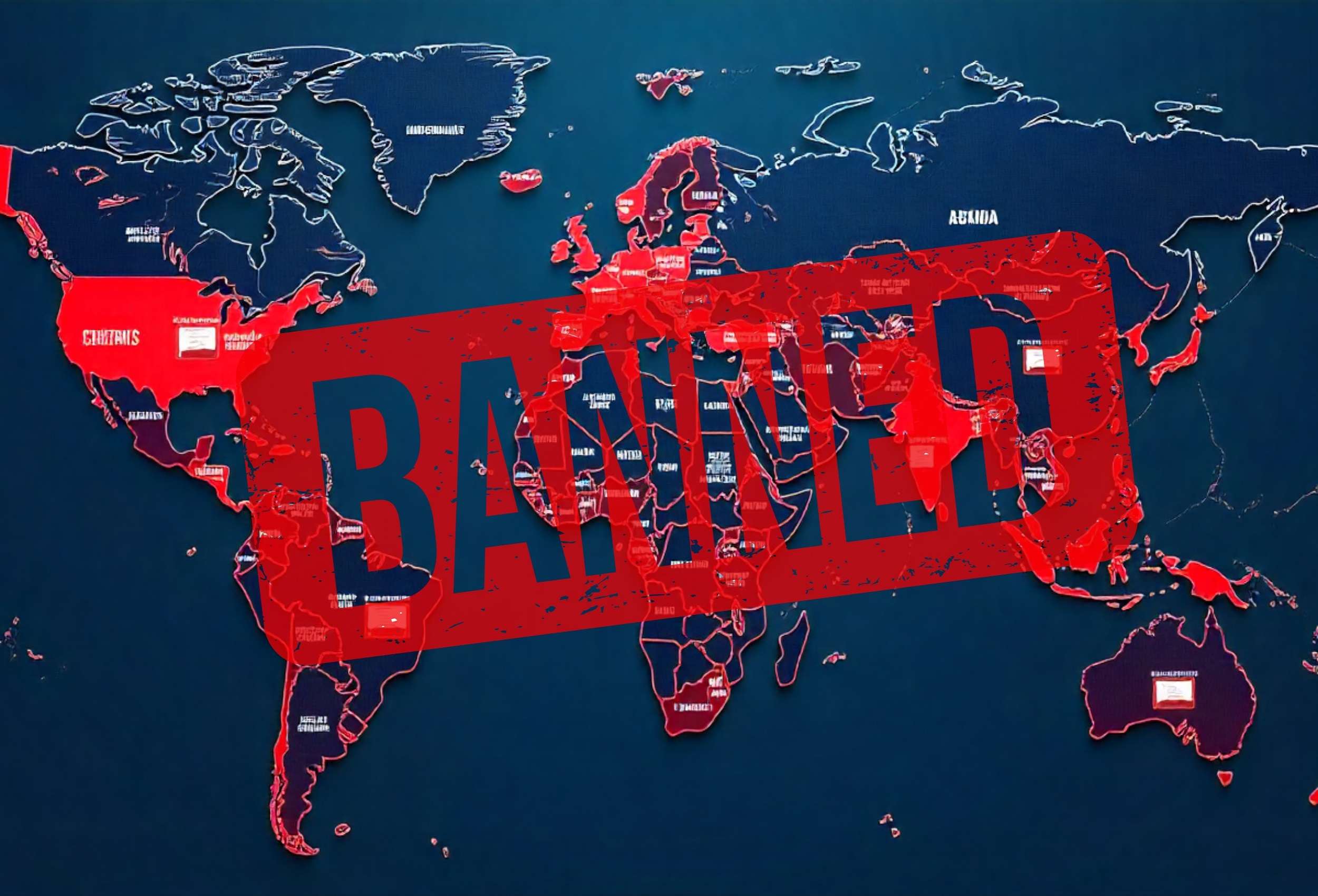
U.S. Immigration Update: 19 Countries Travel Ban Under Trump — Check the List
In late 2025, the US administration under President Donald Trump took a sweeping step: suspending all immigration applications – including green cards, visa adjustments and naturalization – for citizens of 19 countries previously subject to travel bans.
This move represents both a continuation and a deepening of earlier restrictions. In June 2025, Trump issued a proclamation (Proclamation 10949) that restricted the entry of foreign nationals from several countries deemed security risks.
However, the new December 2025 directive from the U.S. Citizenship and Immigration Services (USCIS) doesn’t simply bar entry — it effectively suspends even immigration benefits for people already inside the U.S., regardless of when they arrived.
Which Countries Are on the 19-Country List?
Here is the full list of the 19 countries whose nationals are affected under the current travel ban / immigration freeze. This includes nations previously under full entry bans, and those under partial restrictions.
Countries under full travel ban or high restriction status (some barred completely, some partially restricted):
- Afghanistan
- Myanmar (Burma)
- Chad
- Republic of the Congo
- Equatorial Guinea
- Eritrea
- Haiti
- Iran
- Libya
- Somalia
- Sudan
- Yemen
Countries under partial restrictions / limited access (on “restricted-access” list):
- Burundi
- Cuba
- Laos
- Sierra Leone
- Togo
- Turkmenistan
- Venezuela
According to recent reports, the pause now affects all immigration-related benefit applications (green cards, naturalization, status changes, asylum, etc.) for these 19 countries.
Notably: nationals from these countries who were already living in the U.S. — even those with pending applications, or those awaiting citizenship ceremonies — are impacted.
Also important: citizens of unaffected countries — for example, India — are not on the list, so this ban currently does not impact them.
Why Was the Ban Expanded — What Sparked the Freeze
The latest wave of immigration restrictions stems from a controversial incident — a shooting near the White House, in which two National Guard members were shot. The suspect, according to U.S. authorities, is an Afghan national who had been granted asylum in 2025.
In response, the Trump administration argued that the incident exposed “lax vetting” under previous administrations and declared a need for sweeping security reviews. The recent suspension on immigration applications and green card processing is framed as a direct response to that security concern.
According to internal guidance from USCIS, the agency was instructed on December 2, 2025, to “stop final adjudication on all cases” involving nationals of the 19 nations. That means no approvals or denials — effectively a freeze.
While the administration publicly cites national security and public safety, critics argue the move represents a sweeping crackdown on entire nationalities — including people who have lived in the U.S. for years.
Some advocacy groups and legal experts warn the policy may amount to collective punishment — not individualized, case-by-case assessments.
How Can Individuals Check If They Are Impacted — How to Check Travel Ban
If you or someone you know might be affected by the ban, here are steps to check:
- Check nationality and country of origin: The first — and simplest — filter is whether the person holds citizenship from one of the 19 listed countries above.
- Review application status: The freeze applies to all immigration-related applications for these nationals, including green card petitions (I-485), naturalization requests, asylum claims, changes of status, extensions, etc.
- Check USCIS memos and official updates: The ban arises from a memo issued by USCIS (Dec 2, 2025) pausing adjudication of benefits for the 19-country nationals. If you’ve filed an application — check your USCIS account or consult your immigration lawyer for updates.
- Monitor visa and asylum changes: The freeze also affects asylum decisions, naturalization ceremonies (some have already been cancelled), and green card interviews.
- Stay alert for expansions: Officials reportedly are considering expanding the list to more than 30 “third-world” countries.
As a practical step: if you hold or are applying for U.S. immigration benefits — and are from a listed country — make sure you keep filing (because the memo doesn’t forbid filing), but expect no adjudication, decisions, or ceremonies until further notice.
How Many Countries Did Trump’s Travel Ban Reach — And What’s the New Visa / Immigration Policy?
The 2025 restrictions from Trump mark a revival of his earlier bans from the first presidency. Under Proclamation 10949 (June 2025), entry was restricted for 12 countries, while additional limitations — a partial ban / restricted access — applied to seven more.
Totaling these gives 19 countries — precisely those now subject to the freeze.
But the current freeze is more than just a travel ban; it is an immigration-system overhaul. Some key points of the new policy:
- All immigration benefit adjudications suspended: Green card applications (adjustment of status), asylum cases, naturalization, visa adjustments, status changes — all are halted for nationals of the 19 countries.
- Review of previously granted statuses: The freeze doesn’t only apply to new applicants; USCIS will re-review past grants (green cards, citizenships, etc.) for those from the 19 countries, including people who had their applications approved under previous administrations.
- Naturalization ceremonies cancelled or postponed: Some citizenship ceremonies planned for nationals of those 19 countries have already been cancelled or put on hold.
- Asylum and status-change cases on hold: All pending asylum claims and other discretionary status or benefit cases are frozen.
In effect, the new policy creates a broad, indefinite freeze on legal immigration pathways for a large group of nationalities — not just entry, but status adjustment.
Some U.S. officials have even signaled that the blacklist could expand beyond the 19 currently named countries — potentially covering 30+ nations over time.
What About “American Revenge Travel Surge”?
You mentioned “American revenge travel surge” in your keywords. Typically, “revenge travel” refers to a surge in travel demand after a period of restrictions — e.g., people traveling more once COVID lockdowns lifted.
In the context of the U.S. and the 19-country ban, however, there is no clear “revenge travel surge” — because the new restrictions discourage or block travel (and immigration) for affected nationals. Instead, what we’re seeing is a renewed clampdown, not a surge.
If anything, the term “revenge travel” may apply to Americans traveling abroad or foreign nationals traveling to countries other than the U.S. as a response to restrictive U.S. policies. But in this situation, the dominant trend is increased restriction and freeze — not a surge.
So unless you intend “revenge travel” to refer to something else (e.g., global travel by Americans, or travel demand outside U.S.), the phrase doesn’t quite fit the reality of these ban-driven immigration changes.
If you like — we can add a small section on how such bans might trigger a “boomerang” in global mobility: people avoiding U.S. travel, rising interest in alternate destinations, diaspora travel to home countries, etc.
What This Means — For Immigrants, U.S. Policy, and Global Travel
The new freeze on immigration from 19 countries signals a broader shift in the U.S. approach toward migration and immigration under Trump’s 2025-term policies. Several consequences and implications follow:
- Long delays or indefinite wait times: People who had already applied for green cards or citizenship may face indefinite uncertainty, canceled ceremonies, and no resolution for months (or longer).
- Legal limbo for many immigrants: Even long-term residents, asylum seekers, or applicants approved under previous administrations could be affected, as their cases are re-reviewed.
- Increased scrutiny and vetting: The administration has made clear it will apply “country-specific factors” and enhanced security checks before granting any immigration benefit to nationals from the 19 countries.
- Possible expansion of the ban/restrictions: With reports of a potential extension to “30 or more” countries, more immigrants may become affected in coming months.
- Global mobility and diaspora impact: Communities from the affected nations — many of whom have family or dependents in the U.S. — now face major disruptions. Some may seek alternate destinations; others may be stranded in limbo.
- Potential legal and humanitarian backlash: Critics argue this amounts to collective punishment based on nationality — raising concerns over civil rights, discrimination, and due process.
For people from unaffected countries — including India — the immediate impact is limited. But the broader shift may influence U.S.–global migration patterns, asylum flows, diaspora networks, and international responses.
Common Questions Answered
What countries are on the travel ban list?
The 19 countries are: Afghanistan; Myanmar (Burma); Chad; Republic of the Congo; Equatorial Guinea; Eritrea; Haiti; Iran; Libya; Somalia; Sudan; Yemen; Burundi; Cuba; Laos; Sierra Leone; Togo; Turkmenistan; and Venezuela.
How to check if travel ban affects you or your application?
- Confirm if your nationality is one of the 19 countries.
- If you have a pending immigration application (green card, asylum, naturalization, status change), check your case status via USCIS. The latest memo from Dec 2, 2025 instructs USCIS to suspend final adjudication.
- Consult with an immigration attorney if you had an approved application (green card, citizenship) — some of these are reportedly being re-reviewed.
How many countries did Trump go to (ban)?
Under the 2025 proclamation and the subsequent freeze, 19 countries currently fall under full or partial restrictions.
What is the new visa/immigration policy under Trump?
- Full suspension of immigration benefit adjudication (green cards, citizenship, status changes, asylum) for nationals of the 19 countries.
- Re-review of previously granted green cards and citizenships for nationals from those countries.
- Cancelled or postponed naturalization (citizenship) ceremonies for many applicants.
- Enhanced vetting and security review for any future immigration requests from those countries.
Why This Matters — Global Implications + What to Monitor
The new U.S. policy does more than just tighten borders — it reshapes who can immigrate to the U.S., how, and under what conditions. For the affected 19 countries, this means massive uncertainty for diaspora, families waiting for reunification, asylum seekers, and long-term residents.
For other countries — including India — the immediate impact may appear limited, but globally, this move may shift migration pressure, increase irregular migration attempts, and prompt people to seek alternative destinations (Canada, Europe, Gulf, etc.).
Conclusion
The “19-countries travel ban” and immigration freeze under the Trump administration marks one of the most sweeping restrictions on migration in recent U.S. history. It extends far beyond denying entry — it freezes legal immigration pathways even for those already inside the country.
If you — or someone you know — are from one of the 19 listed countries and have a U.S. immigration application pending, or even approved, this policy likely affects you. Meanwhile, global migration patterns — and the lives of millions — may be reshaped as a result.
As this situation continues to develop, it is important to be informed, reviewing official communications, such as through USCIS, and consulting reliable immigration attorneys if necessary.
Want to keep traveling? Explore affordable countries to visit that offer great value and zero travel restrictions.